Liquidations
Definition
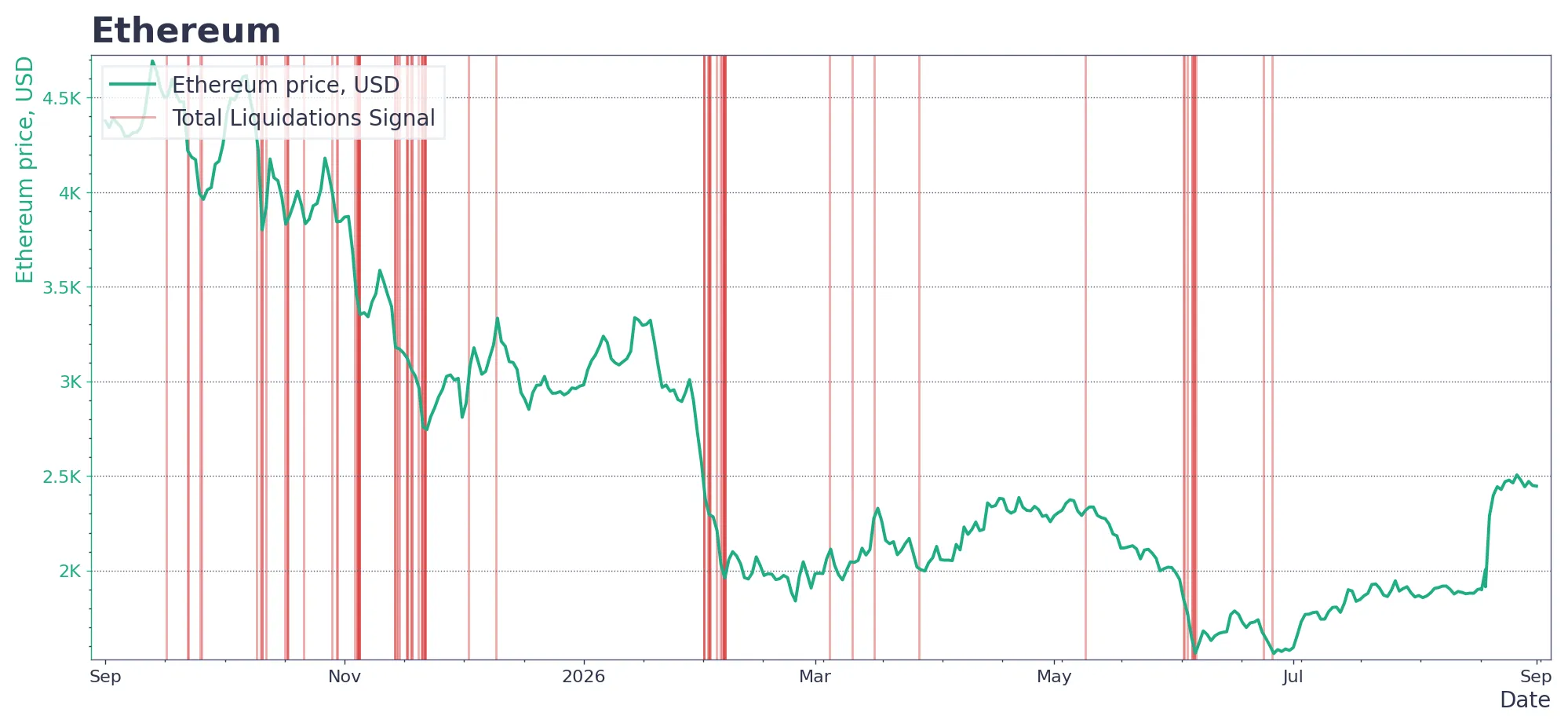
Liquidations anomaly is designed to monitor significant liquidations on Ethereum. Signals is triggered when the total liquidations sum exceeds threshold. The threshold itself is adaptive during some time after the latest fired signal. A rapid succession of anomalies indicates a sharp increase in the scale of these liquidations.
A huge liquidation in the crypto space refers to the forced selling of a trader’s position, typically on leveraged trades, when the market moves against them. In the context of cryptocurrencies, liquidation occurs when a trader borrows funds to trade (using margin or leverage) and the value of their position falls below a certain threshold, at which point the exchange automatically sells the assets to cover the loss.
List of included lending protocols
- Compound
- Compound v3
- Aave v2
- Aave v3
- MakerDAO
- Spark
- Fraxlend
- Morpho
Use Cases
- Real-Time Monitoring: The anomaly tracks total liquidations over a 1-hour rolling window. When the liquidation volume surpasses a predefined threshold (e.g., $1M), an anomaly is triggered, alerting the fund’s risk management team.
- Escalating Alert System: If multiple anomalies fire within a short period (e.g., 2 hours), the threshold doubles, indicating that the liquidation size is rapidly increasing. This warns the fund of an accelerating sell-off, potentially signaling a market crash or price correction.
- Automated Trading Response: Upon receiving the data anomaly, the hedge fund’s automated trading bots can execute predefined strategies:
- Reduce Exposure: Automatically decrease leveraged positions to minimize risk during a potential downturn.
- Trigger Stop Losses: Close positions before liquidity dries up or prices fall drastically.
- Execute Hedging: Initiate hedging strategies, such as buying options or shorting correlated assets, to offset potential losses.
- Human Intervention: The risk management team receives the alert and analyzes the market conditions to determine if additional manual intervention is required. They might pause trading or adjust strategies based on market sentiment.